Vigilance Awareness Week 2026: Probity for Prosperity in Investing
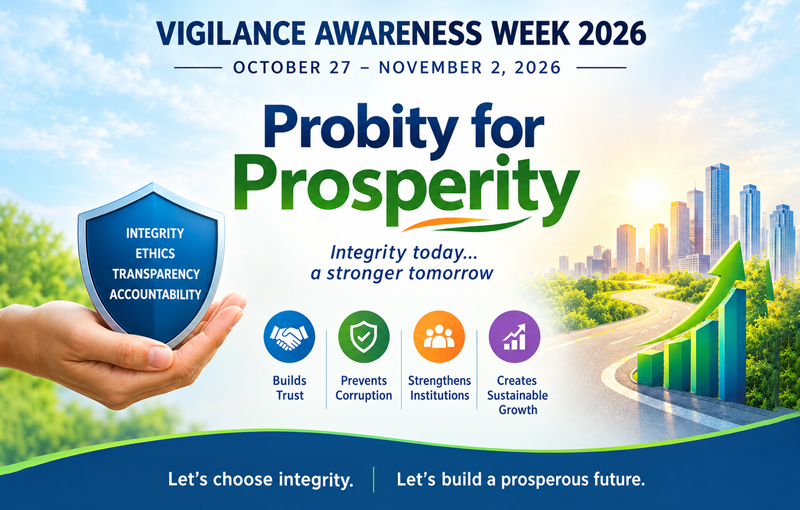
Vigilance Awareness Week 2026, observed from 26th October to 1st November 2026, carries the theme - "Probity for Prosperity." It reminds us that prosperity is not built merely by chasing returns; it is built on integrity, transparency, ethical conduct, and informed decision-making. For investors, this theme has a direct and practical meaning. A sound financial future depends not only on choosing the right investment, but also on choosing the right people, platforms and information sources. Integrity in investing begins with the investor.
Integrity: The First Line of Defence
Integrity means doing the right thing even when it is inconvenient. For investors, it means resisting shortcuts such as acting on unverified "tips," casually sharing KYC documents, transferring money to unknown accounts, or expecting guaranteed returns from market-linked products. Fraudsters often exploit urgency, greed, and fear. They may promise unusually high returns, claim insider information, impersonate regulators or well-known financial institutions, or use social-media influencers to create false credibility. Investor awareness is a critical protection mechanism: understanding how fraudsters operate helps investors recognise warning signs before money is lost.
The simple rule that states, ‘If an offer sounds too good to be true, pause and verify,’ helps investors. No legitimate SEBI-regulated mutual fund or investment adviser can guarantee market returns. Investments always carry risk, and responsible investing requires accepting that reality, rather than seeking unrealistic certainty.
Transparency: Know What You Are Buying
Transparency means demanding clarity before committing money. Investors should understand the product, its objective, risk level, liquidity, fees, tax treatment, and suitability for their financial goals.
Before investing, ask:
- Is the product regulated by SEBI or another recognised authority?
- Who is selling it, and are they registered or authorised to do so?
- What are the risks, costs, and exit terms?
- Does the investment match my goal, time horizon and risk appetite?
- Can I independently verify the scheme, platform or person making the claim?
Digital platforms have made investing easier, but convenience does not replace due diligence. Investors should check whether a digital platform is registered with AMFI or SEBI and should verify information received through social media before acting on it.
Invest Only Through Registered Intermediaries
One of the most important investor responsibilities is to deal only with recognised market institutions and SEBI-registered intermediaries or regulated entities.
For mutual funds, investors should invest through:
- An AMFI-registered mutual fund distributor (MFD), or
- A SEBI-registered investment adviser (RIA).
Registration matters because it creates accountability. Registered intermediaries operate within a regulatory framework, and investors have formal avenues for grievance redressal if something goes wrong. Investing through unregistered agents, Telegram groups, WhatsApp "experts," or anonymous online sellers removes those protections and increases exposure to fraud.
Investors should also complete KYC only through official and verified channels, avoid sharing OTPs, passwords, or account credentials, and ensure that payments are made only to verified bank accounts or authorised payment gateways.
Verify Before You Invest
Verification is the practical expression of vigilance. Before investing, investors can:
- Check the mutual fund’s official website and scheme documents.
- Verify the distributor’s AMFI registration or the adviser’s SEBI registration.
- Confirm that the platform is authorised and uses secure payment channels.
- Read the scheme information document, key information statement, and fact sheet.
- Be cautious with unsolicited messages, guaranteed-return schemes, and pressure to invest immediately.
- Avoid relying solely on finfluencer content; use it, if at all, only as a starting point for further verification
An informed investor does not need to become a market expert. But every investor should know the basics: their objective, risk tolerance, asset allocation, the importance of diversification, and the need for an emergency fund. These principles help create a resilient portfolio and reduce the temptation to chase speculative opportunities.
Know Your Rights and Responsibilities
SEBI’s investor framework recognises that investor protection is a shared responsibility. Investors have the right to fair and equitable treatment and to expect time-bound redressal of grievances filed through SCORES. At the same time, they have the responsibility to deal with recognised market institutions and registered intermediaries, and to raise grievances with the concerned entity within prescribed time limits.
In practice, this means investors should retain transaction confirmations, account statements, emails and communication records. If a problem arises, the first step is to approach the concerned company or intermediary. If the issue remains unresolved, the investor can escalate it to SEBI through SCORES. SCORES is SEBI’s transparent online grievance-redressal platform for complaints against listed companies, registered intermediaries and market infrastructure institutions. It allows investors to lodge complaints, follow up, and track their status online. Investors should first take up the grievance with the concerned entity. If they remain dissatisfied, they can file a complaint through the SCORES portal or mobile app. Entities against whom complaints are lodged are required to file an Action Taken Report with SEBI within 30 days of receiving the complaint.
SEBI also provides toll-free helplines-1800 22 7575 and 1800 266 7575-for investors seeking more information about SCORES.
Take the Integrity Pledge
Vigilance Awareness Week is also an opportunity for individuals to make a personal commitment to ethical conduct. Investors can take the integrity pledge at https://pledge.mygov.in/cvc/ and reaffirm their commitment to honesty, transparency, and accountability in their financial decisions. The pledge is symbolic, but its implications are real. It encourages each investor to avoid shortcuts, verify claims, deal only with authorised intermediaries, protect personal data, and use formal grievance channels when needed.
Prosperity Through Responsible Investing
"Probity for Prosperity" is especially relevant to personal finance. Wealth creation is a long-term process powered by disciplined investing, goal-based planning, diversification, and compounding-not by speculation or blind trust. Integrity, transparency and honesty are not abstract values; they are practical tools for financial safety. When investors stay informed, verify information, and act responsibly, they protect not only their own wealth but also the trust and stability of the wider financial system.
SEBI Registration No. MF/020/94/8
Mutual Fund Investments are subject to market risk, read all scheme related documents carefully.
RECOMMENDED READS
LATEST ARTICLES
- Passive funds can play an important role in your investment portfolio
- GenAI for Business Expansion: MFD Module by Aditya Birla Sun Life MF NIPUN
- Aditya Birla Sun Life Quant Fund: One of the best performing quant funds
- Nomination Transmission and Gifting in Mutual Funds
- Investor Rights in Mutual Funds

An investor education initiative by Aditya Birla Sun Life Mutual Fund
Follow Birla Sun Life MF
More About ABSL MF
POST A QUERY