Why you need to focus on asset allocation in current market conditions

Current market context
Equity market has been volatile since the beginning of the year. US Iran war disrupted energy flows and sent crude prices soaring. Though the market stabilized after US and Iran agreed on a ceasefire, volatility returned again (see the chart below) when ceasefire broke down. Surging crude prices raised inflationary concerns. Even though India’s Q1 real GDP growth of 7.8% surpassed expectations, Nifty has fallen for 7 straight weeks breaking the sentimental 22,000 level.
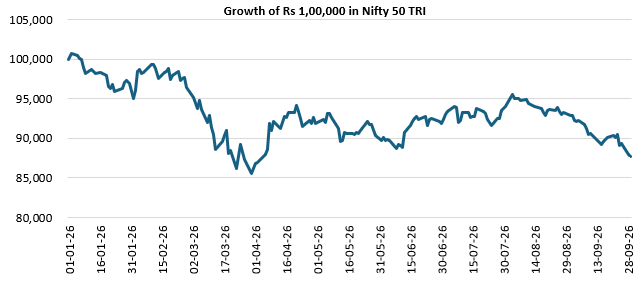
Source: NSE, Advisorkhoj Research, as on 29th September 2026.
Rising global bond yields change risk sentiments towards emerging market equities. With US 10-year Treasury Bond yields at 5.2%, global investors may prefer the safety of US Treasuries over emerging market equities e.g. India. Weakening INR and rising commodity prices may have been other contributing factors for FIIs pulling out money from Indian equities. FIIs have been net sellers in 6 out of 9 months in this calendar year (see the chart below).
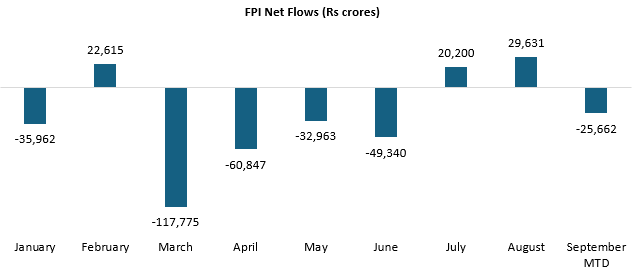
Source: NSDL, Advisorkhoj Research, as on 29th September 2026.
Long term bond yields in India have been on the rise since the beginning of this calendar year. Though yields softened as crude prices cooled, they have been hardening again as global bond surged (see the chart below).
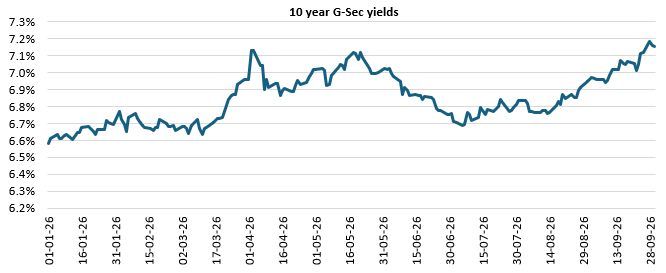
Source: Investing.com, Advisorkhoj Research, as on 29th September 2026.
Gold is considered to be a safe haven asset. However, the spectacular bull run in precious metals created a speculative bubble, which burst in the first quarter of this calendar year. Since then, gold has been fluctuating within a range (see the chart below). While gold’s appeal increases in geopolitical uncertainties, high US bond yields take the sheen off gold since both US Treasuries and gold are seen as safe haven assets in times of uncertainties or geo-political tensions.
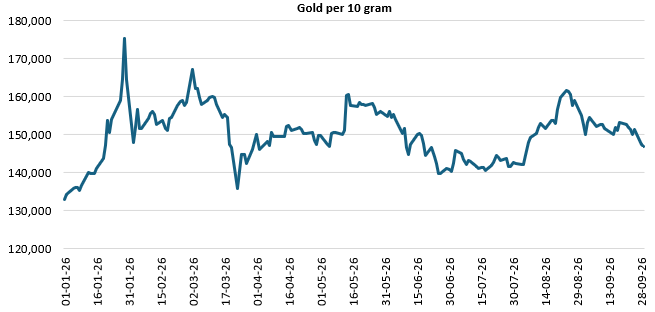
Source: MCX, Advisorkhoj Research, as on 29th September 2026.
While Indian equities underperformed versus developed markets, US equities are having a strong year. Better performance of international markets, combined with INR depreciation would have given superior returns to Indian investors investing in international equities (see the chart below). Apart from the US market, other developed markets like Japan (Nikkei), UK (FTSE) etc have also outperformed broad Indian market.
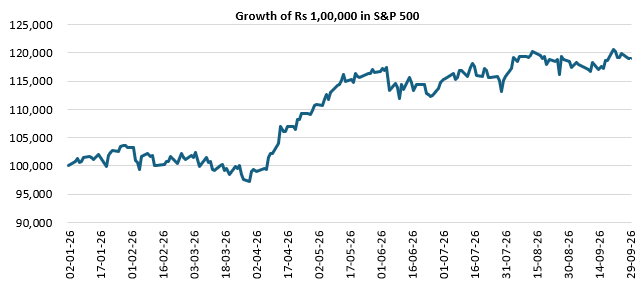
Source: Bloomberg, Advisorkhoj Research, as on 29th September 2026.
Performance of different asset classes this year, reinforces the importance of asset allocation. Instead of investing in one asset class, if you diversify your investment across several asset classes, you can not only reduce portfolio volatility, but you can also get superior risk adjusted returns. A 1986 study done in the United States showed that asset allocation is the most important determinant of portfolio performance (source: Brinson, Hood, Beebower, Financial Analyst Journal 1986).
Asset allocation can you help you avoid behavioural biases
Behavioural biases influence our investment decisions. The chart below shows that redemptions tend to increase when volatility increases. Behavioural biases impact the actual returns you get from your investments. Greed and fear are the two most common behavioural biases and influence investment decisions. Irrational euphoria in bull markets and panic in bear markets causes great harm to your long-term financial interests. Asset allocation can help you control emotional urges and keep disciplined in your investments.
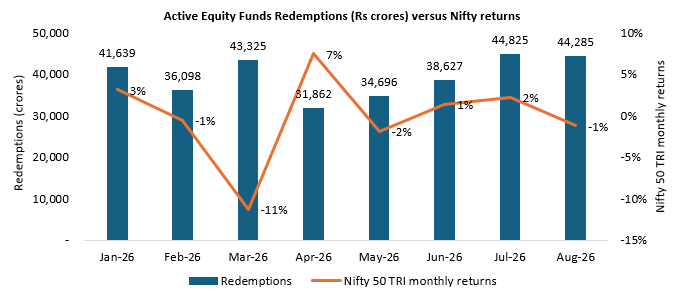
Source: AMFI, NSE, Advisorkhoj Research, as on 29th September 2026.
Different asset allocation for different risk profiles / investment needs
One size fit all, does not work in mutual funds. Different asset allocations are suitable for different risk profiles and investment needs. Your asset allocation depends on your risk appetite and investment goals. Accordingly, different investors may have different asset allocations. You should consult your financial advisor if you need help in determining your optimal asset allocation. Hybrid mutual funds provide different types of asset allocation solutions for different risk profiles.
Why invest in multi asset allocation funds?
- Winners rotate across asset classes: The chart below shows the calendar year returns of different asset classes over the last 15 years. You can see that equity outperformed gold 7 times and gold outperformed equity 10 times in the last 17 years. International equities outperformed domestic equity 11 times in the last 17 years. A multi asset allocation strategy will provide stability to your investment portfolio.
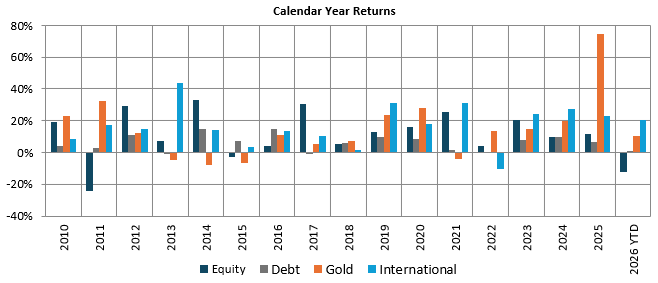
Source: MCX spot prices, NSE, Bloomberg, Advisorkhoj Research, as on 29th September 2026. Equity is represented by Nifty 50 TRI, debt by Nifty 10 year Benchmark G-Sec Index, Gold by MCX spot prices and international by S&P 500 (in INR)
- Equity and gold are usually counter cyclical: Gold outperforms when equity underperforms and vice versa (see the chart below). Therefore, asset allocation to equity and gold will bring more stability to your investment portfolio.
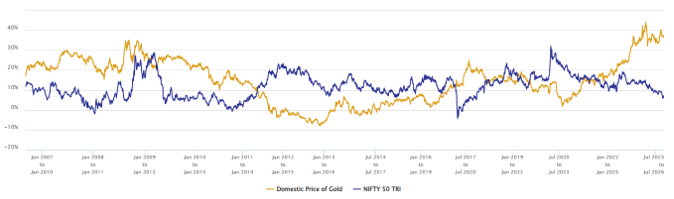
Source: MCX spot prices, NSE, Advisorkhoj Research, as on 29th September 2026.
- Indian and international equities have low correlation: Indian and international equities outperform each other in different market phases / economic conditions (see the chart below). Adding international equities to your investment portfolio can add returns and bring stability when Indian equities are underperforming.
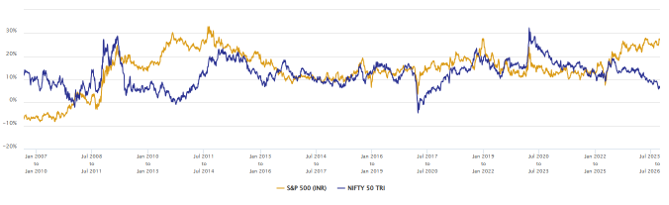
Source: Bloomberg, NSE, Advisorkhoj Research, as on 29th September 2026.
- Exposure to 3 or more asset classes: You can get exposure to 3 or more asset classes e.g. equity, fixed income, commodities, international etc, in a single fund through multi asset allocation fund. You can rely on the expertise of a professional fund manager to manage the asset allocation of your fund and also do timely rebalancing.
- Tax efficient rebalancing: There is no tax incidence for you when the fund rebalances as opposed to tax events being triggered if you were rebalancing between asset classes in DIY investing.
Who can invest in Multi Asset Allocation Funds?
- Investors looking for a long-term strategic allocation to different asset classes.
- Investors looking for relatively stable returns with low downside risks.
- Investors with moderate to high-risk appetites.
- Investors with long investment tenures. We recommend minimum 3 years investment tenures for multi asset allocation funds.
Investors should consult with their financial advisors or mutual fund distributors if multi asset allocation funds are suitable for their investment needs.
Mutual Fund Investments are subject to market risk, read all scheme related documents carefully.
RECOMMENDED READS
LATEST ARTICLES
- How a fund of funds with 65 percentage allocation to debt can be of use for risk averse investors
- Role of asset allocation in achieving your financial goals
- Why having large and midcap funds in the portfolio matters now
- Role of index funds in portfolio construction
- Large and Midcap Funds: Mix of growth and stability

The information being provided under this section 'Investor Education' is for the sole purpose of creating awareness about Mutual Funds and for their understanding, in general. The views being expressed only constitute opinions and therefore cannot be considered as guidelines, recommendations or as a professional guide for the readers. Before making any investments, the readers are advised to seek independent professional advice, verify the contents in order to arrive at an informed investment decision.
Mutual Fund investments are subject to market risks, read all scheme related documents carefully.
Quick Links
Follow Nippon India MF
More About Nippon India MF
POST A QUERY