Magnum Equity Ex Top-100 Long-Short Fund: Navigating market movements in mid and small cap space

SBI MF has launched a new investment strategy under a specialized investment fund (SIF), the Magnum Equity Ex Top-100 Long-Short Fund. The fund focuses on companies beyond the top 100 by market capitalization using core-satellite design with a structured long-short approach. The fund provides exposure to wider and evolving opportunities in the mid/small cap segments, navigating through market movements using sophisticated investment strategies, while providing operational ease, transparency, an investment ticket (Rs 10 lakh minimum investment) and tax efficiency. The NFO opened for subscription on 7th August 2026 and will close on 20th August 2026. In this article, we will review Magnum Equity Ex Top-100 Long-Short Fund.
What are SIFs?
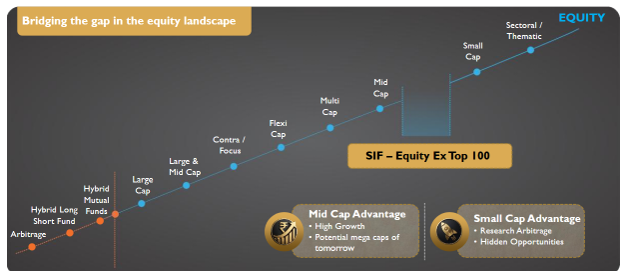
SIFs bridge the gap between mutual funds and alternate products like PMS and AIFs.
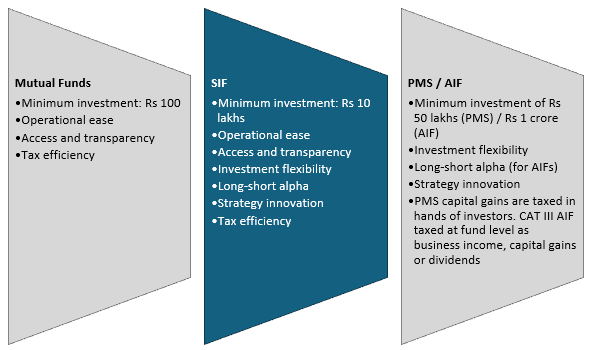
Magnum Equity Ex Top-100 Long-Short Fund: Salient features
- Investment Universe: Primarily ex-top 100 universe.
- Core portfolio: Expected to hold a portfolio of high-conviction ideas, allowing meaningful allocation to each investment while maintaining adequate diversification
- Satellite portfolio: Comprise of tactical holdings with incremental change being the primary focus. This will include trading ideas on long and short side.
- Use Derivatives: Derivatives will be used to execute investment strategies in the satellite portfolio, using both long (wherever possible) and shorts. Options may be used opportunistically to complement existing stock positions or as independent strategies
Magnum Equity Ex Top-100 Long-Short Fund: Core - satellite framework
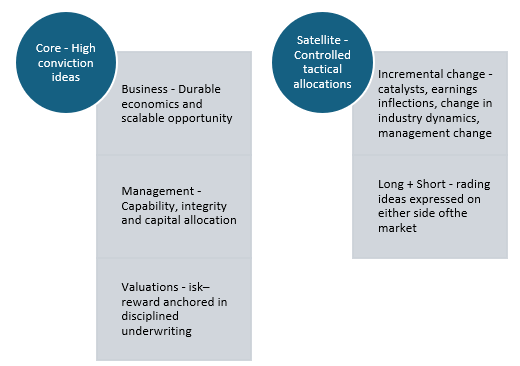
Core remains the portfolio anchor; Satellite sizing moves with opportunity, liquidity and conviction
Magnum Equity Ex Top-100 Long-Short Fund: Core investment philosophy
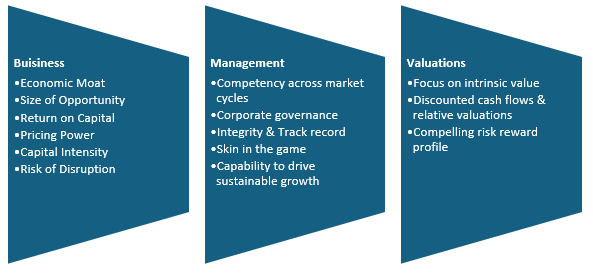
Why ex Top-100?
- Midcap and small cap stocks have the potential to outperform large cap stocks in the long term (see the chart below)
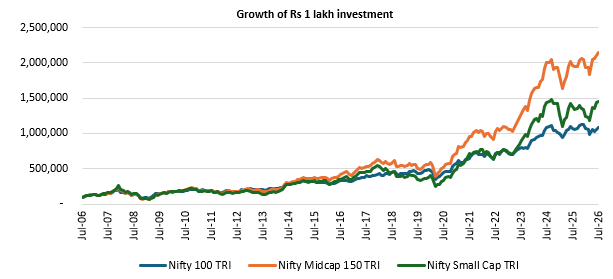
Source: NSE, Advisorkhoj Research, as on 31st July 2026
- More compounding potential: The chart below shows the market capitalization growth of different market cap segment i.e. beyond top 50, 100, 250 and 500. You can see that the compounding potential is higher in midcaps and small caps.
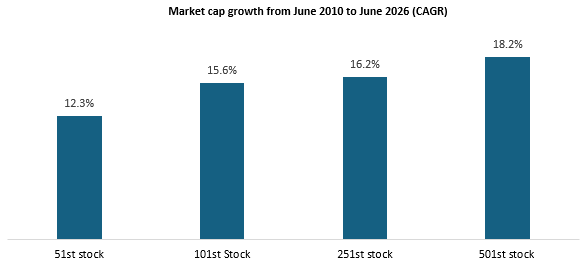
Source: Bloomberg, Period: June 2010 to June 2026
- Under researched: A majority of India's listed universe lies beyond the Top 100 remains structurally under-owned and under-researched.
- Due to this compounding potential is higher in midcaps and small caps. The table below shows how many stocks compound 5X, 10X and 20X in different market cap segments over the last 20 years. As wealth creation bar rises, the universe of potential winners expands dramatically beyond Large Caps.

Source: Bloomberg, Period: June 2010 to June 2026
- Risk is higher: 14% of midcap stocks and 23% of small cap stocks gave negative returns in the last 16 years (Source: Bloomberg, Period: June 2010 to June 2026). Hence, extensive research capabilities and disciplined investment strategy is required.
- Bigger drawdowns: Midcap and small cap stocks experience bigger drawdowns than large cap stocks (see the chart below). A long-short strategy may reduce downside risks in volatile markets.
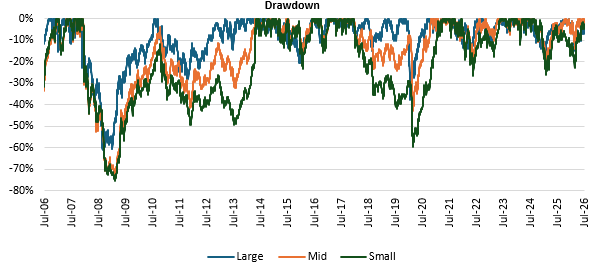
Source: NSE, Advisorkhoj Research, as on 31st July 2026. Large caps are represented by Nifty 100 TRI, Midcaps by Nifty Midcap 150 TRI and Small caps by Nifty Small Cap 250 TRI
Product positioning - Risk / Return
Who can find Magnum Equity Ex Top-100 Long-Short Fund suitable?
- HNI investors with a good understanding of financial markets and seeking exposure to long-short equity strategies with a minimum investment of ₹10 lakh.
- Investors seeking exposure to mid and small-cap segments.
- Investors with a very high-risk appetite.
- Investors who prefer equity taxation. Long term capital gains (holding period of 12 months) will be tax free up to Rs 1.25 lakhs and taxed at 12.5% thereafter. Short term capital gains will be taxed at 20%.
In view of individual circumstances and risk profiles, investors are advised to consult their investment and/or tax advisers before making any investment decisions.
Mutual Fund Investments are subject to market risk, read all scheme related documents carefully.
RECOMMENDED READS
- Demystifying debt mutual funds
- Why Balanced Funds may be the best investments for new mutual fund investors
- How do you know if you have good funds in your mutual funds portfolio: part 1
- Know your mutual fund tax obligations to manage your investments effectively
- Asset Allocation is much more important than fund selection
LATEST ARTICLES
- SBI Balanced Hybrid Fund NFO: Benefit of Equity and Debt in a Single Portfolio
- SBI Nifty Midcap 150 Momentum 50 ETF FOF: Catch the midcap growth opportunity as market recovers
- SBI Large and Midcap fund: Potential for Long Term Wealth Accumulation
- SBI Focused Fund: On a strong performance upturn
- SBI Quality Fund: Invest in the long term growth potential of Quality Stocks
Quick Links
Follow SBI MF
More About SBI MF
POST A QUERY