SBI Balanced Hybrid Fund NFO: Benefit of Equity and Debt in a Single Portfolio

The SBI MF has launched its NFO, the SBI Balanced Hybrid Fund, on 10th August 2026. The fund will remain open for subscription till 24th August 2026. In this article, we will review the SBI Balanced Hybrid Fund.
What is a Balanced Hybrid Fund?
Balanced Hybrid funds are a type of hybrid scheme that invest in a mix of equity and debt, offering diversification within a single scheme. Under SEBI guidelines, these funds must maintain 40 to 60 percent allocation in equity and 40 to 60 percent in debt. With exposure limited to two core asset classes and without the use of derivatives, arbitrage, or additional assets such as gold or international securities, Balanced Hybrid Funds provide a simpler asset allocation approach.
As per the current tax regulations short term capital gains (for holdings up to two years) are taxed as per the investor’s income tax slab, while long term capital gains (for holdings over two years) are taxed at 12.5 percent, without indexation benefits.
Why is asset allocation important?
- Risk Vs Return
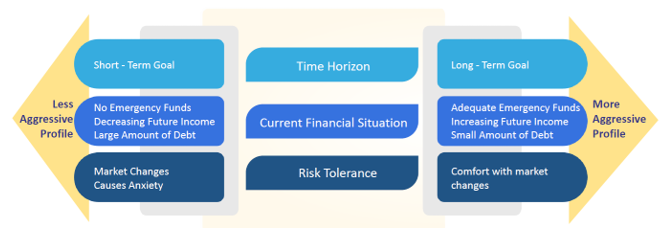
Asset allocation plays a central role in balancing risk and return, helping bring stability to an investment portfolio while supporting long-term financial objectives. Factors such as investment horizon, financial circumstances and tolerance for market volatility shape how conservative or growth oriented an investor’s allocation may be. Investors typically decide their allocation based on their risk appetite and investment goals. For those who primarily invest in traditional fixed income avenues such as bank deposits or small savings schemes and are exploring diversified solutions, a Balanced Hybrid Fund may be considered as one of the available options, depending on individual suitability and in consultation with a financial advisor.
- Behaviour Gap
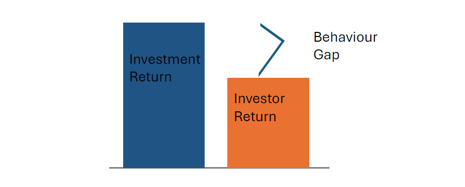
The average investor underperforms the market over long periods of time by a wide margin. Experts refer to this as the “behaviour gap,” which is the difference between the higher investment returns investors can possibly earn, versus the lower returns they earn due to their emotional behaviour in responding to whatever is happening in the markets; volatility being the leading culprit.
The Solution to the Problem
Why should you invest in Balanced Hybrid Funds?
- The Equity journey
Equity has the potential to generate long term wealth, but it is often marked by volatility owing to economic and geopolitical events. The chart below shows the equity performance in the last 20 years amidst the market upheavals.
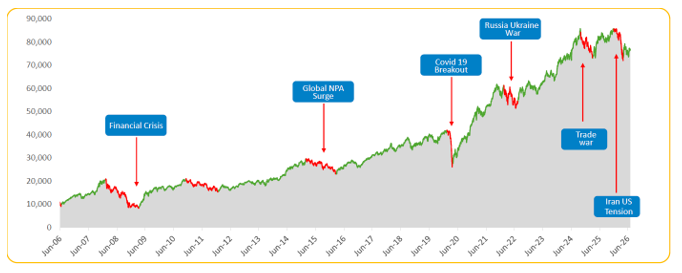
Source: SBI Product ppt, MFI 360. Data As on 30th June 2026. Disclaimer: The above is for illustration purpose only, It should not be construed to be indicative of investment strategy performance in any manner. Past performance may or may not be sustained in future
- Falling Interest Rates
Over the past few decades, the structural & economic reforms have slowly moved India towards a low interest rate regime. Interest rates in the developed economies have also been falling for the last few decades. Hence, investors can no longer rely solely on fixed income instruments for achieving their financial goals. Also, the formation of the RBI Monetary Policy Committee and flexible inflation targeting has its impact on Interest Rates. Over time, moderating interest rates have reduced the return potential across debt markets. The withdrawal of indexation benefits has further weakened their relative post-tax attractiveness, particularly for investors in higher tax brackets.
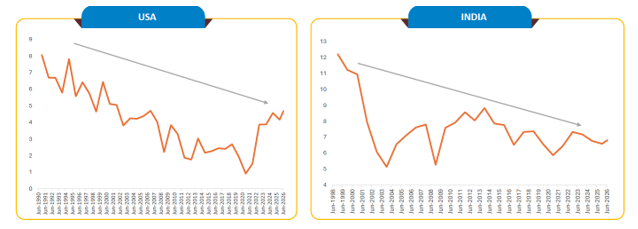
Source: Bloomberg. Data as on 30th June 2026
- Correlation between Debt and Equity
The low long-term correlation of 0.19 between equity and debt and an average of 0.22 supports investing through a single hybrid fund, offering diversified exposure with growth potential and relative portfolio stability.
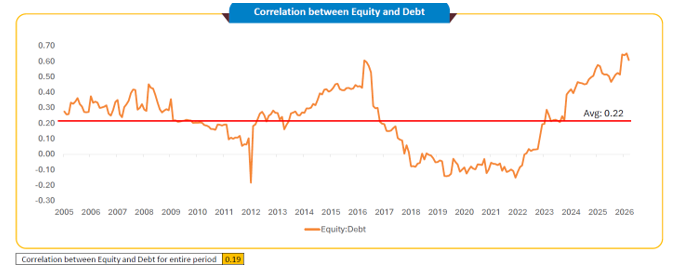
Source MFI 360. Data As on 30th June 2026
- Drawdowns
The hybrid allocation has historically contained drawdowns relative to pure equity, while retaining meaningful participation in market returns.
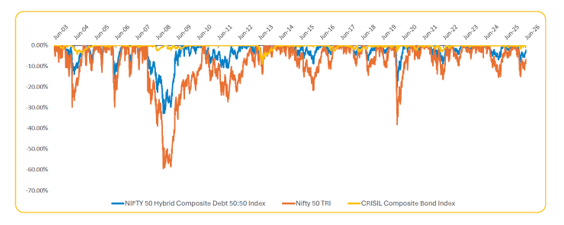
Source: MFI 360 and NSE. Data As on 30th June 2026: The above is for illustration purpose only, It should not be construed to be indicative of investment strategy performance in any manner. Past performance may or may not be sustained in future.
- Calendar Year Returns between Equity, Fixed Income and Hybrid Benchmark
The hybrid index moderated equity downside during weak market years, while retaining meaningful participation during market recoveries. Equity delivered better upside but with significantly higher volatility, whereas debt provided stability with relatively modest returns.
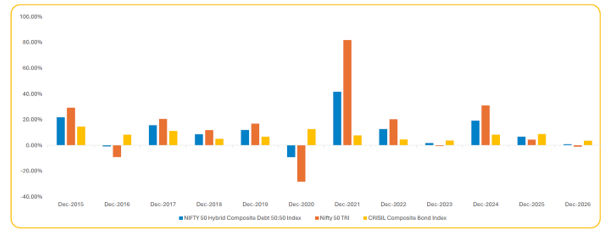
Source: MFI 360 and NSE. Data As on 31st Dec 2025. The above is for illustration purpose only, It should not be construed to be indicative of investment strategy performance in any manner. Past performance may or may not be sustained in future.
- Financial Year Returns
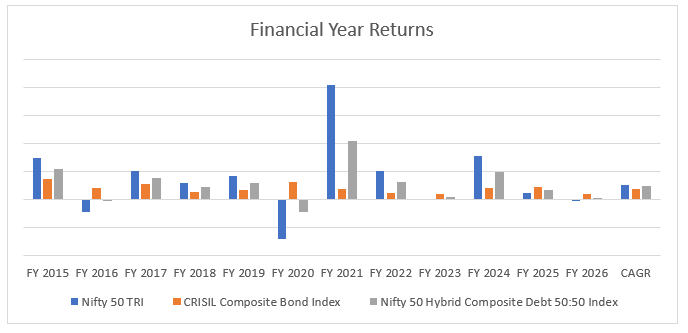
Source: MFI 360 and NSE. Data from 1st April 2015 to 31st March 2026. The above is for illustration purpose only, It should not be construed to be indicative of investment strategy performance in any manner. Past performance may or may not be sustained in future.
- Returns Since Inception
The hybrid index delivered an 11.72% CAGR with visibly lower volatility and drawdowns than pure equity, indicating a more balanced risk-adjusted return profile. The combination of equity participation and debt stability supported meaningful long-term returns while moderating downside risk across market cycles.
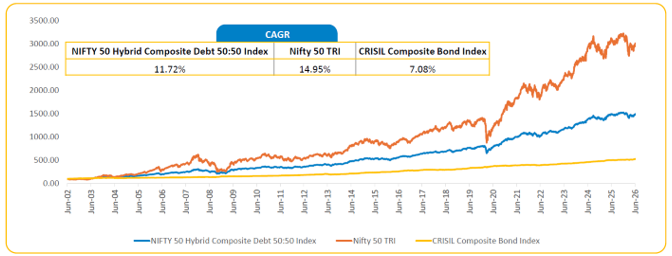
Source MFI 360 and NSE. Data As on 30th June 2026. The above is for illustration purpose only, It should not be construed to be indicative of investment strategy performance in any manner. Past performance may or may not be sustained in future
Why invest in Balanced Hybrid Funds now?
- Equity market uncertainty: Equity markets can experience periods of volatility during global geopolitical developments, leading to fluctuating investor sentiment.
- Debt market sensitivity: Debt markets may also take cues from global developments including changes in inflation expectations and interest-rate outlook.
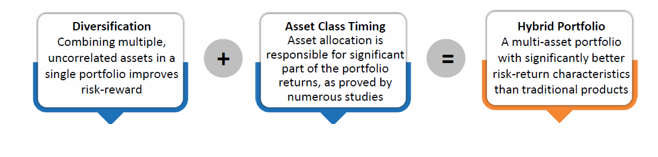
- Multi-asset exposure: Investing exclusively in a single asset class can result in concentrated risk and higher return variability.
- A balanced response: A balanced allocation to equity and debt can help investors manage uncertainty while maintaining exposure to both growth and income-generating opportunities.
SBI Balanced Hybrid Fund
The SBI Balanced Hybrid Fund is managed by Fund managers Tanmaya Desai for the Equity portion and Rajeev Radhakrishnan for the Fixed Income portion. The Investment Objective of the fund is to generate long-term capital appreciation and income by investing only in equity and debt instruments. The NFO will remain open for subscription between 10th August and 24th August 2026.
Portfolio Management
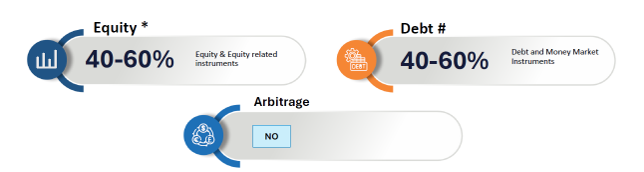
Note: *Equity & Equity related instruments, #Debt and Money Market Instruments, including Units of Debt oriented mutual fund schemes, $- As per the regulation, redemption shall be done within 3 working days beyond which interest shall be payable. The portfolio of the scheme is subject to changes within the provisions of the Scheme Information document of the Scheme. The asset allocation and investment strategy will be as per the Scheme Information Document. A covered call is constructed by holding a long position in a stock and then selling (writing) call options on that same asset.
Portfolio Construct
- Equity Allocation: Allocation to equity is based on the following parameters:
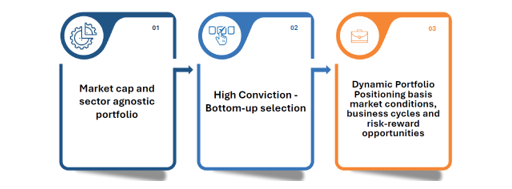
Note: The portfolio of the scheme is subject to changes within the provisions of the Scheme Information document of the Scheme. The asset allocation and investment strategy will be as per the Scheme Information Document. The above parameters are not exhaustive.
- Debt Allocation:
- The fund aims to generate accrual income by investing in debt securities across the credit spectrum, including select non AAA issuers, subject to the fund’s internal risk framework. (non-triple-AAA papers included*)
- Duration: Duration is managed tactically based on the interest-rate and macroeconomic outlook, with the flexibility to adjust duration positioning in response to evolving market conditions.
The debt allocation would be based on the following parameters
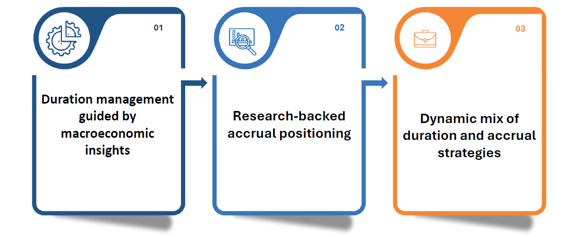
Note: The portfolio of the scheme is subject to changes within the provisions of the Scheme Information document of the Scheme. The asset allocation and investment strategy will be as per the Scheme Information Document.*not more than 10% allocation of the debt portion will be allocated to AA- papers.
Who should invest in this fund?
- Investors looking for capital appreciation and income over sufficiently long investment horizons.
- Investors seeking a balanced blend of Debt and Equity exposure with relatively lower volatility.
- The fund is suitable for first time investors or investors who do not have high risk appetites.
- Investors seeking options beyond conventional fixed income investments e.g. senior citizens or retired individuals aiming to generate tax-efficient returns compared to traditional fixed income options.
- Investors who have an investment horizon of 3 years or longer.
Investors should consult their financial advisors or mutual fund distributors if SBI Balanced Hybrid Fund is suitable for their investment needs.
Mutual Fund Investments are subject to market risk, read all scheme related documents carefully.
RECOMMENDED READS
- Demystifying debt mutual funds
- Why Balanced Funds may be the best investments for new mutual fund investors
- How do you know if you have good funds in your mutual funds portfolio: part 1
- Know your mutual fund tax obligations to manage your investments effectively
- Asset Allocation is much more important than fund selection
LATEST ARTICLES
- Magnum Equity Ex Top 100 Long Short Fund: Navigating market movements in mid and small cap space
- SBI Nifty Midcap 150 Momentum 50 ETF FOF: Catch the midcap growth opportunity as market recovers
- SBI Large and Midcap fund: Potential for Long Term Wealth Accumulation
- SBI Focused Fund: On a strong performance upturn
- SBI Quality Fund: Invest in the long term growth potential of Quality Stocks
Quick Links
Follow SBI MF
More About SBI MF
POST A QUERY