

Latest Saving, Investing & Mutual Fund Articles

6797 Viewed
Debt mutual funds invest in a variety of fixed income securities like treasury bills, commercial papers, certificates of deposit, corporate bonds and government bonds, primarily with the objective of generating income for investors. Almost all fixed income securities have a specified maturity period. They pay periodic (e.g. quarterly, yearly...Read More

How SBI Healthcare Opportunities Fund can be a good investment in the current conditions
Aug 14, 2020 / Dwaipayan Bose
10749 Viewed
The equity market has been highly volatile since the outbreak of Coronavirus pandemic. Though Sensex has recovered handsomely in the last 3 months, it is still almost flat on a trailing twelve month basis. Almost all industry sectors have been badly affected by the COVID-19 pandemic with one exception – healthcare, a sector which was...Read More

10302 Viewed
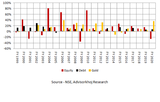
Different asset classes have different risk / return characteristics and give different returns in different market conditions. The chart below shows calendar year returns of different asset classes over the last 10 years; BSE 100 TRI is used as the proxy for equity, CRISIL Short term Bond Fund Index for debt and MCX Gold futures for Gold...Read More

Nippon India Dynamic Bond Fund: Rolling down strategy for good long term returns
Jul 28, 2020 / Dwaipayan Bose
8392 Viewed
With banks reducing FD interest rates, we are seeing investor interest in debt mutual funds over the last few months. However, many investors are concerned about credit risks affecting debt funds. With the economy contracting and company revenues severely hit in the wake of COVID-19 pandemic credit risk concerns are likely to...Read More
What is Multi Asset Allocation Funds and how SBI Multi Asset Allocation Fund is placed
Jul 18, 2020 / Dwaipayan Bose
10047 Viewed
Multi Asset Allocation funds are hybrid mutual fund schemes which invest in 3 or more asset classes. According to SEBI regulations multi asset allocation funds must invest minimum 10% each in at least 3 asset classes. Apart from the two most popular asset classes, debt and equity, these schemes invest in asset classes like gold, real estate...Read More
8709 Viewed
Asset allocation is a strategy to balance risk and returns by investing in different asset classes. The major asset classes are equity, fixed income or debt and in some cases, also gold. Financial planners suggest that right asset allocation is critical in achieving your financial goals, since it is the most important attribute of portfolio performance...Read More
Principal Emerging Bluechip: Strong long term SIP STP and SWP performance
Jul 15, 2020 / Advisorkhoj Research Team
5588 Viewed
We have reviewed Principal Emerging Bluechip Fund, a large and midcap equity fund from Principal Mutual Fund stable, a number of times in the last few years. In our usual fund reviews, we look at a performance of a scheme across various market conditions, performance versus benchmark and peers, portfolio composition etc. In this post, we...Read More

14099 Viewed
Bharat Bond ETF, A Government of India initiative,is a fixed income exchange traded fund (ETF). The ETF has fixed maturity dates. The ETF invests in Public Sector Undertaking bonds maturing on or before scheme maturity. If you have a demataccount you can buy the ETF from stock exchange. If you do not have a demataccount then...Read More
9761 Viewed
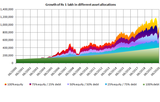
Risk diversification in investment parlance is essentially an application of the age old idiom, “Do not put all your eggs in one basket”. Prices of different assets rise or fall depending upon market and economic conditions. If you spread your investment over different assets, your risk of making a loss reduces compared to investing in a single...Read More
7538 Viewed
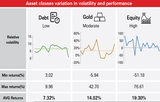
Volatility is the fluctuation in the price of an asset. Asset prices are rarely unidirectional in the short term. Some asset classes are much more volatile than others e.g. equity is much more volatile than fixed income or gold. Volatility is the measure of risk in an investment. The chart below shows the price movement of Nifty 50 over the past one...Read More




Recommended Reading





Top Performing Mutual Funds
Tools and Calculators


